It usually starts with something small.
Ooh, a new water bottle! This cute notebook. A candle I definitely didn’t need, but the label said something like “clean linen on a spring day” and I was sold.
And, you guessed it, before I knew it, the kitchen drawer wouldn’t close properly, and the shelf I’d just decluttered a month earlier looked cluttered all over again.
I had always gone through decluttering sessions, but it wasn’t until 2020 that I really understood the impact of minimalism in my life.
It made me realise that decluttering once isn’t enough. If you don’t have a way to manage what comes into your home after the big clear-out, the clutter will always find its way back in.
So, that’s when I started using the one-in-one-out rule. And honestly? It’s one of the easiest, most effective habits I’ve picked up on my minimalist journey.
You might also like:
- Decluttering Rules: 13 Important Things To Do When Decluttering Your Home
- Life after decluttering: What happens next?
- 9 Ways I’ve Developed a Decluttering Mindset
- 17 Unconventional Decluttering Tips You Haven’t Already Heard
NO TIME TO READ NOW? PIN FOR LATER!
What Is the One-In-One-Out Rule?
The one-in-one-out rule is exactly what it sounds like: every time you bring something new into your home, you let go of something you already own.
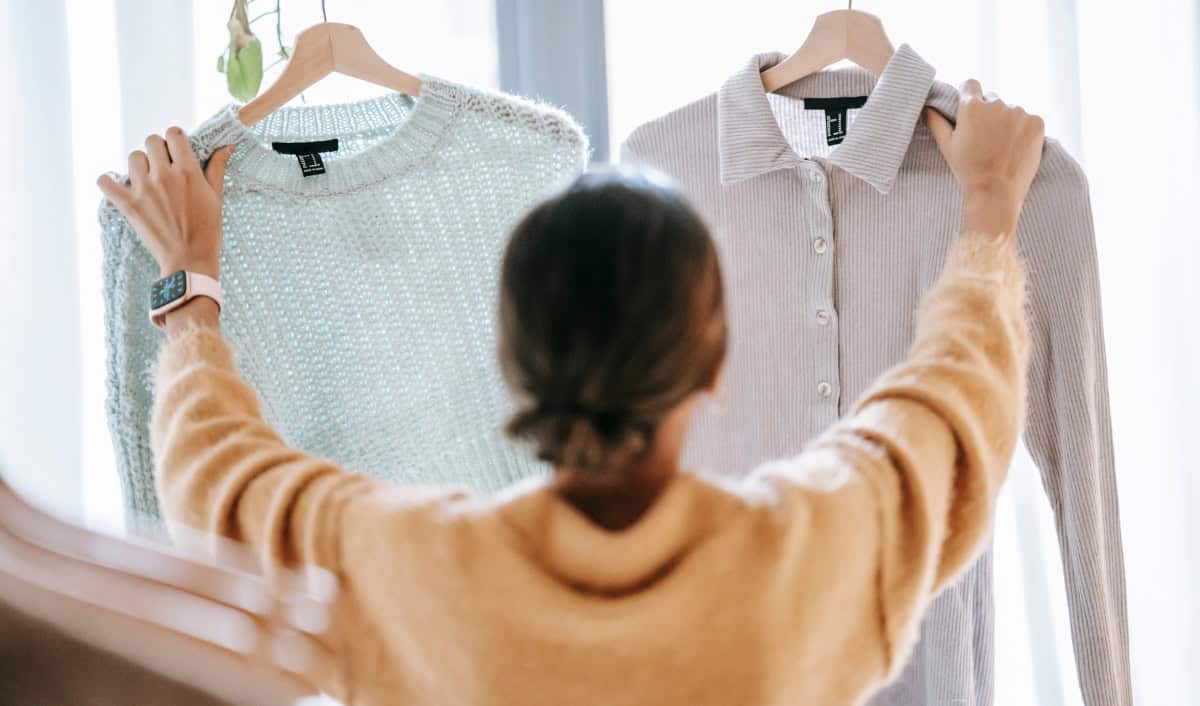
Bought a new jumper? Choose one from your wardrobe to donate or recycle. Picked up a new book? Let one go from your shelf.
It’s a simple swap – one item in, one item out.
We’re not trying to make life harder or be super strict. It’s about keeping a healthy balance. You’re not saying no to new things – you’re just making sure they don’t add to the clutter.
Why This Rule Works So Well
My one-in-one-out policy isn’t about doing a massive clear-out (although you should definitely start with one of these). It’s more about keeping things under control afterwards. It helps you maintain the progress you’ve already made.
Here’s why it works:
- It keeps clutter from sneaking back in. You create a natural boundary, and boundaries are a minimalist’s best friend.
- It makes you more intentional with new purchases. You’re far less likely to impulse-buy if you know something has to go in exchange.
- It builds lasting habits. This is one of those small, manageable things you can stick with. It doesn’t require huge effort, just a little awareness.
When and Where to Use It
This rule works best when you’re in what I call the “maintenance phase”. That’s after you’ve done the big declutter and want to keep your home feeling light and under control.
But honestly? You can start using it anytime. Pssst! Start now!
It’s especially useful in areas that seem to attract clutter overnight:
- Clothing – especially if you love shopping sales or online hauls
- Kitchen gadgets – because there’s always a new slicer, dicer or mixer someone swears by
- Kids’ toys – it’s a fantastic lesson for kids to learn to value what they have rather than constantly seeking something new
- Craft supplies – crafty people love collecting different materials and tools, but often end up with more than they ever use
- Books and stationery – no judgment, I used to have a major love for stationery
How to Make the One-In-One-Out Rule Work for You
The beauty of this rule is in its simplicity, but like anything, it works best when it becomes a habit. A few things that help:
- Pause before you buy. Ask yourself, what am I willing to let go of if I bring this in? If the answer is “nothing,” maybe you don’t need it.
- Keep a running donation box. Make it part of your home setup, just like your laundry basket.
- Make it a family thing. Kids get a new toy? They choose one to pass on. It teaches them balance without it feeling like punishment.
- Track it. If you like journaling or habit tracking, mark your swaps. It can be oddly satisfying!
Make It a Habit, Not a Hassle
At first, the one in one out rule might feel like just one more thing to remember, especially if you’re used to shopping without thinking twice. But give it time. The more you practise the one-in-one-out rule, the more automatic it becomes.
Eventually, you won’t have to agonise over every purchase or stand in a shop debating whether something is “worth it.” You’ll simply know: If something comes in, something else goes. No drama, no decision fatigue.
When I buy something new these days, let’s say it’s a pair of trainers, I automatically think about what trainers I have at home. Do I prefer this new pair to any of those? Am I happy to let go of a pair at home? Then the decision is made.
And that’s the beauty of it. It simplifies everything. You’ll start shopping more mindfully without even knowing it, and keeping your home clutter-free will feel a whole lot easier.
Final Thought
If you’ve ever decluttered only to find yourself back where you started a few months later, try this: one in, one out. That’s it.
Simple. Sustainable. And surprisingly effective.
You’ll find yourself making more intentional choices and maintaining a clutter-free space effortlessly.


